
FOMO meaning in text has become one of the most searched slang terms in modern digital communication. In today’s fast-paced social media world, people constantly use short abbreviations, and “FOMO” is one of the most powerful emotional slang terms used in chats, Instagram captions, Snapchat messages, and online conversations.
In simple words, FOMO stands for “Fear Of Missing Out”. It describes the anxious feeling people get when they think others are enjoying something exciting without them. Whether it’s a party, event, trend, or even an online discussion, FOMO is deeply connected with human psychology and social behavior.
This detailed guide will break down everything about FOMO meaning in text, including its origin, usage, examples, psychology, and real-life impact. Let’s dive deep into this viral internet slang 🔥
What Is FOMO Meaning In Text?
The term FOMO meaning in text refers to the abbreviation used in digital conversations to express “Fear Of Missing Out.” It is widely used in texting, social media comments, and online chats when someone feels they are not part of an exciting moment or event.
For example:
- “Everyone is at the concert, I’m feeling FOMO 😭”
- “Seeing their vacation pics gives me FOMO”
FOMO is not just slang—it represents a real emotional reaction triggered by social comparison and digital exposure.
Origin of FOMO Term
The term FOMO was first popularized in the early 2000s, but its psychological roots go back much further. Marketing experts and psychologists used it to describe consumer behavior before it became a social media trend.
However, FOMO became globally popular with the rise of platforms like:
- 🎥 TikTok
- 👻 Snapchat
These platforms constantly show people highlights of others’ lives, which increases the feeling of missing out.
Why People Use FOMO In Text Messages
People use FOMO in text messaging to express emotions quickly and effectively. Instead of explaining a long feeling of jealousy or regret, they simply type “FOMO.”
Common reasons include:
- Feeling left out of events
- Missing trending activities
- Seeing friends having fun without them
- Regretting not joining something exciting
This shorthand makes communication faster and emotionally expressive in digital conversations.
Real-Life Examples Of FOMO Meaning In Text
Understanding FOMO becomes easier when you see real examples:
“Everyone went on a trip this weekend, I stayed home and now I have serious FOMO 😩”
“This new game update is crazy, I feel FOMO because I haven’t played yet!”
These examples show how FOMO reflects emotional reactions in everyday situations.
FOMO In Social Media Culture 📱
Social media is the biggest driver of FOMO in modern society. People constantly see curated highlights of others’ lives, such as vacations, parties, achievements, and luxury experiences.
This leads to comparison and emotional reactions like:
- 😟 Anxiety
- 😔 Regret
- 😣 Dissatisfaction
Influencers and celebrities often intensify FOMO by showcasing perfect lifestyles, which may not always reflect reality.
Psychology Behind FOMO 🧠
FOMO is deeply connected to human psychology. It is based on the fear of exclusion and the desire to belong.
Psychologists explain that FOMO happens due to:
- Social comparison theory
- Need for belongingness
- Fear of regret
When people see others enjoying life, their brain triggers a comparison response, which leads to emotional discomfort.
Common Variations Of FOMO
FOMO has several variations used in different contexts:
- FOMO – Fear Of Missing Out
- FOJI – Fear Of Joining In
- JOMO – Joy Of Missing Out
Each term describes different emotional responses to social situations.
How FOMO Affects Daily Life
FOMO influences many aspects of modern life. It can affect decisions, emotions, and even spending habits.
Common impacts include:
- Overuse of social media
- Impulse spending on events or trends
- Feeling socially disconnected
However, awareness of FOMO can help people make healthier digital choices.
How To Respond When Someone Says FOMO
If someone says they have FOMO in a conversation, you can respond in a supportive and friendly way:
- “Don’t worry, there will be more chances 😊”
- “You didn’t miss much, we’ll do it again soon!”
- “Let’s plan something together next time 👍”
This helps reduce emotional pressure and strengthens relationships.
Common Mistakes People Make About FOMO
Many people misunderstand FOMO. Some think it is just jealousy, but it is deeper than that.
Common mistakes include:
- Thinking FOMO is always negative
- Ignoring its psychological effects
- Overusing social media without breaks
Understanding FOMO correctly helps improve emotional balance.
FOMO vs JOMO – Key Difference
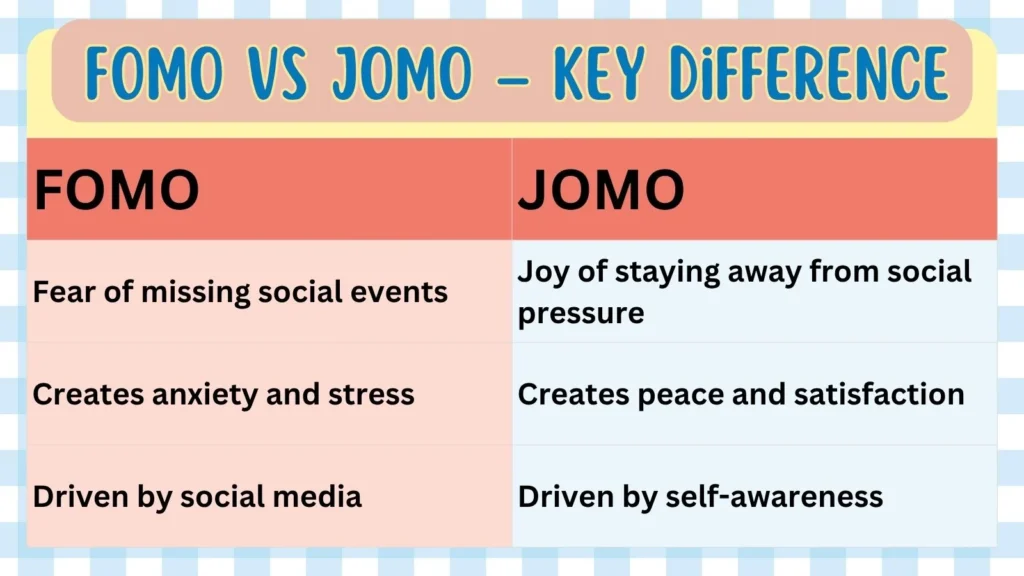
| FOMO | JOMO |
|---|---|
| Fear of missing social events | Joy of staying away from social pressure |
| Creates anxiety and stress | Creates peace and satisfaction |
| Driven by social media | Driven by self-awareness |
While FOMO creates pressure to stay constantly connected, JOMO encourages people to enjoy their own space.
Importance Of FOMO In Digital Communication
FOMO is not just slang—it plays an important role in online communication trends. It helps express emotions quickly and connects people through shared experiences.
Brands and marketers also use FOMO in advertising strategies to create urgency and engagement, such as:
- “Limited time offer ⏳”
- “Only a few seats left!”
FAQs:
1. What is FOMO meaning in text?
FOMO means “Fear Of Missing Out” and is used in chats to express feeling left out of something exciting.
2. Is FOMO a negative emotion?
It can be both positive and negative depending on the situation, but mostly it is linked to anxiety or regret.
3. Why do people experience FOMO?
People experience FOMO due to social comparison and constant exposure to others’ activities on social media.
4. What is the opposite of FOMO?
The opposite of FOMO is JOMO, which means “Joy Of Missing Out.”
5. Is FOMO common in teenagers?
Yes, teenagers experience FOMO more due to heavy social media usage and peer pressure.
Conclusion:
FOMO meaning in text is more than just a slang term—it reflects a deep emotional experience shaped by modern digital life.
From social media influence to psychological triggers, FOMO affects how people think, feel, and interact online.
While it is natural to feel left out sometimes, understanding FOMO can help you maintain emotional balance and make smarter digital choices.
Remember, not every moment needs to be lived online—sometimes the best experiences are the ones you enjoy offline 🌿

I am Ahsan and i am a passionate writer and language enthusiast behind PunScope, a platform dedicated to exploring meanings, word origins, and simple explanations. He aims to make learning vocabulary easy, engaging, and accessible for everyone.