
Data Science Course
A Data Science course teaches skills to collect, analyze, visualize, and model data to solve real-world problems.
Typical modules include:
Python for Data Science
Statistics & Probability
Data Cleaning & Wrangling
Data Visualization (Matplotlib, Seaborn, PowerBI, Tableau)
Machine Learning (Supervised & Unsupervised)
SQL & Databases
Big Data Tools (Hadoop, Spark)
Deep Learning (optional)
Real-world projects
Best platforms to study:
Coursera
Udacity
DataCamp
edX
Google Data Analytics Certificate (beginner-friendly)
Data Science Jobs
Popular data science career roles include:
Data Scientist
Data Analyst
Machine Learning Engineer
Business Intelligence Analyst
Data Engineer
AI Engineer
Research Scientist
Product Data Scientist
Big Data Engineer
Industries hiring data scientists:
Tech companies
Banks & FinTech
Healthcare & Pharma
E-commerce
Telecom
Manufacturing
Government & Research
Data Science Salary (General Global Ranges)
Salaries vary by country, company, and skill level, but here are typical approximate ranges:
Entry-level: $60,000 – $90,000
Mid-level: $90,000 – $130,000
Senior-level: $130,000 – $180,000+
Machine Learning Engineers: Often $120,000 – $200,000
Data Engineers: $110,000 – $170,000
Remote roles often pay well, especially for strong portfolios.
Data Science Books
Recommended beginner & advanced books:
Beginner-Friendly
Python for Data Analysis — Wes McKinney
Data Science from Scratch — Joel Grus
Naked Statistics — Charles Wheelan
Intermediate
Hands-On Machine Learning with Scikit-Learn, Keras & TensorFlow — Aurélien Géron
Storytelling with Data — Cole Nussbaumer Knaflic
Advanced
Pattern Recognition and Machine Learning — Christopher Bishop
Deep Learning — Ian Goodfellow
Data Science PDF (Common Free Resources)
Search for the following PDFs online:
“Python Data Science Handbook PDF — Jake VanderPlas”
“Think Stats PDF — Allen B. Downey”
“Deep Learning Book PDF — Goodfellow” (Official free version available)
(I can generate a custom Data Science PDF for you if you want — just say “make a Data Science PDF”.)
Data Science Degree
A Data Science degree (Bachelor’s or Master’s) typically includes:
Programming
Statistics
Machine Learning
Data Engineering
Mathematics
Business Analytics
Research & Capstone projects
Alternatives to a degree:
Bootcamps
Online certificates
Self-study + portfolio
Many employers hire skilled candidates without a degree if they have projects and experience.
Data Science Syllabus (Standard Outline)
1. Programming
Python
R (optional)
Jupyter Notebook
Git/GitHub
2. Mathematics
Linear Algebra
Calculus basics
Probability
Statistics
3. Data Handling
SQL
Pandas
NumPy
Data Cleaning
4. Data Visualization
Matplotlib
Seaborn
Tableau/PowerBI
5. Machine Learning
Regression
Classification
Clustering
Decision Trees & Random Forest
Model Evaluation
6. Advanced Topics (Optional)
Deep Learning
Natural Language Processing
Big Data (Spark)
MLOps
7. Capstone Project
A full real-world end-to-end data project.
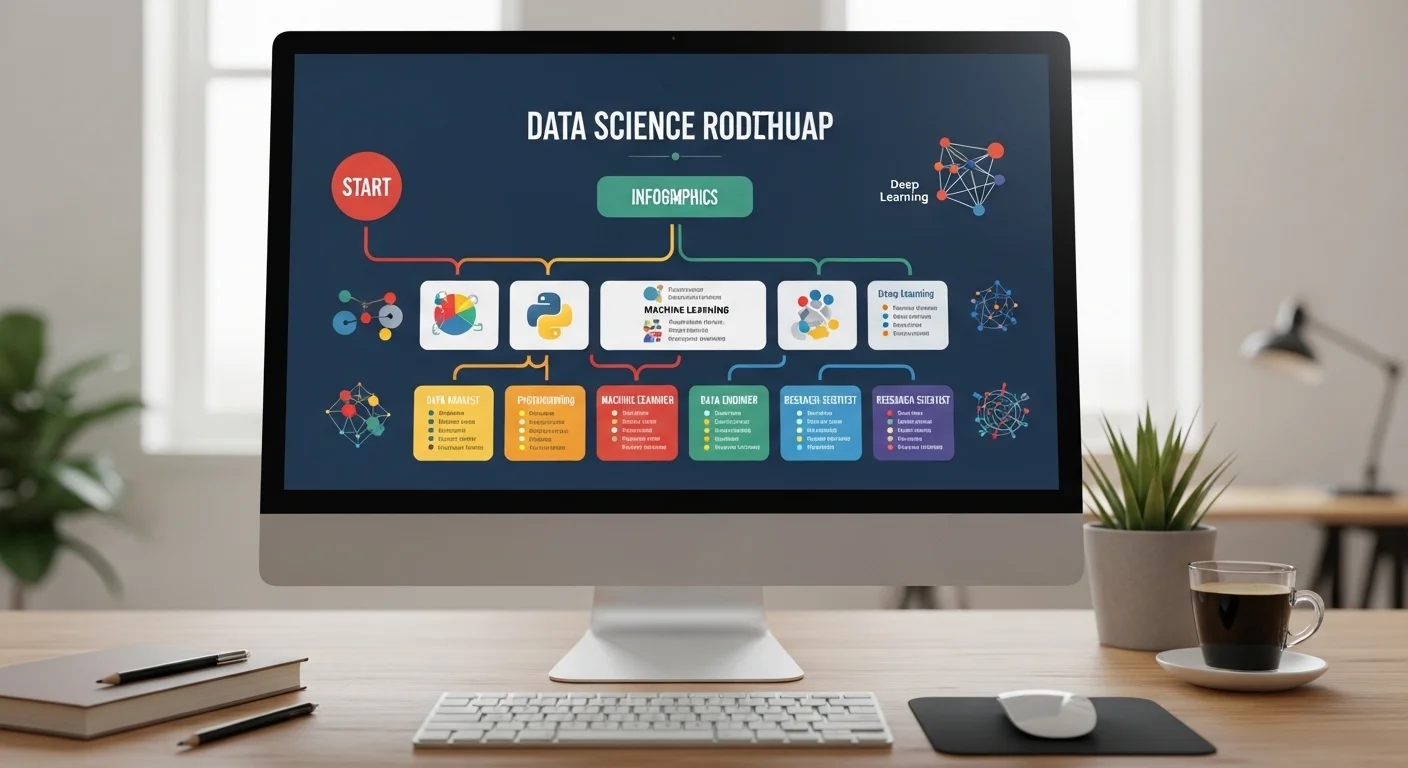
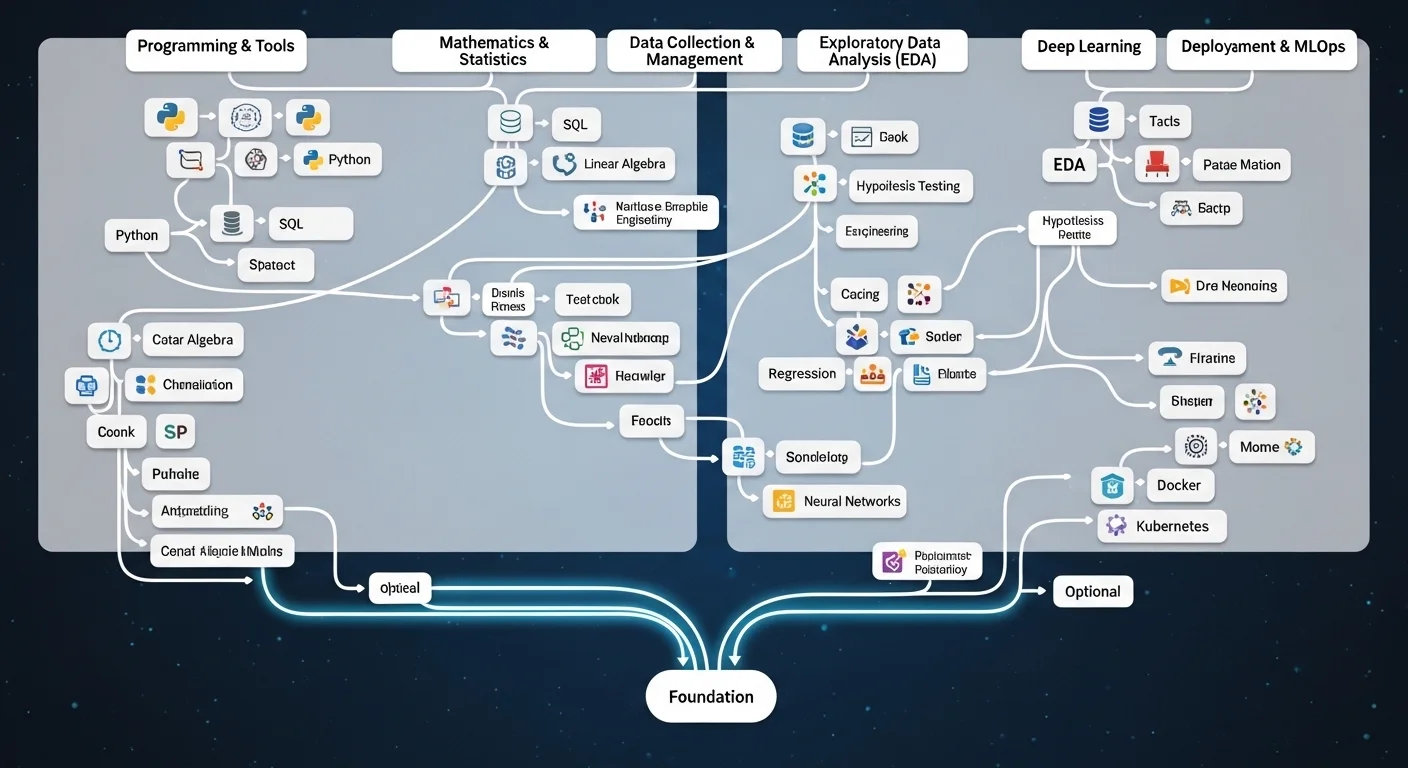
Data Science Roadmap (Beginner → Advanced)
Step 1: Learn the Foundations
Python
Basic math & stats
Data types & logic
Step 2: Learn Data Analysis
Pandas
NumPy
SQL
Step 3: Data Visualization
Seaborn, Matplotlib
Dashboard tools (Tableau/PowerBI)
Step 4: Machine Learning
Supervised
Unsupervised
Model evaluation & tuning
Step 5: Build Real Projects
Examples:
Sales prediction model
Sentiment analysis
Customer segmentation
Recommendation system
Step 6: Portfolio + GitHub
Aim for 5–10 strong projects.
Step 7: Learn Advanced Tools
Deep Learning
Big Data (Spark)
Cloud (AWS, Azure, GCP)
Step 8: Apply for Jobs
Create resume
Practice LeetCode (basic)
Do ML interview questions
Prepare portfolio demos
📊 Funny Data Science Jokes
Why did the neural network break up? Too many layers of drama.
My model loves to gossip… it always predicts outcomes.
Linear regression walks into a bar… the bartender says, “I see a trend!”
Decision trees make bad friends—they always branch out.
Machine learning is like dating: overfitting is clingy, underfitting is distant.
Why was the AI sad? It lost its sense of humor vector.
Deep learning: the only place overthinking is rewarded.
K-means clustering: because even algorithms need social circles.
My machine learning model’s favorite song? “Don’t Stop Training.”
Overfitting is like memorizing jokes… nobody laughs outside class.
📊 Statistics Giggles
3 statisticians walk into a bar… or maybe just one, depending on confidence intervals.
Correlation does not imply causation… but it sure is fun to joke about.
Why was the statistician always calm? He had standard deviations.
I have 99 problems, but a p-value ain’t one.
Mean people ruin everything… especially histograms.
Standard deviation walks into a bar… everything is relative.
I like my data like I like my coffee: normally distributed.
Bayesian statistics: updating jokes with evidence.
A regression walked into a bar… and predicted the end of the world.
Life is like a probability distribution: sometimes skewed.
💻 Programming Humor
Why do Python programmers wear glasses? Because they can’t C.
My code works… I have no idea why.
Git happens.
Debugging: where you remove the bugs you introduced.
Why did the developer go broke? He used up all his cache.
IndentationError walks into a bar… nevermind, it’s still inside the block.
I have a love-hate relationship with loops—they always repeat themselves.
Exceptionally funny? Only if it’s handled.
A byte walks into a bar… and the bartender says, “We don’t serve your kind.”
I dream in Python, but my nightmares are in Java.
📈 Data Visualization Fun
Pie charts: good for parties, bad for arguments.
Scatter plots are like friendships: some points are just too far apart.
I make graphs because life is too messy to read tables.
A bar chart walks into a line chart… awkward.
Why do data viz people love color? They need more hues in their life.
Box plots: the gift that keeps on whiskering.
Histograms: because frequency matters.
My favorite plot twist? Scatter plot correlation.
Line charts: showing trends, not intentions.
Don’t trust a graph with a y-axis starting at 0… it’s a liar.
🧠 AI & Deep Learning Jokes
AI loves puzzles—it’s neural by nature.
Why did the AI go to school? To improve its learning rate.
Deep learning is like a teenager: needs lots of data and sleep.
AI doesn’t have feelings… yet it still judges your predictions.
Chatbots: proving machines can misinterpret sarcasm perfectly.
Why did the AI fail art class? It only recognized patterns.
Neural networks: complex, confusing, but strangely endearing.
AI: turning “I think” into “I predict.”
Reinforcement learning: rewarding mistakes one step at a time.
AI pun: I had one, but it wasn’t trained properly.
📦 Big Data Laughs
I have a love-hate relationship with big data… mostly hate.
Why did the dataset cross the road? To be cleaned on the other side.
Hadoop walks into a bar… it stores all your beers redundantly.
Big data: making small mistakes huge since forever.
I tried to hug big data… it crashed my system.
Data lakes: where everything floats, even your sanity.
Streaming data: because who needs sleep anyway?
My dataset is like my life: missing values everywhere.
Big data is like gossip: the more you have, the less sense it makes.
Analytics: turning chaos into charts.
🛠️ Tools & Software Fun
R vs Python: the ultimate sibling rivalry.
SQL walks into a bar… and asks for a JOIN.
Python libraries: the gift that keeps on importing.
Tableau: making dashboards sexy since forever.
Excel: where formulas go to cause heartbreak.
Jupyter Notebook: my favorite playground.
GitHub: proving collaboration can be chaotic.
Docker: containers for data… and my patience.
IDEs: like childhood homes, full of memories.
Pip install humor: sometimes it works, sometimes it doesn’t.
🐍 Python Puns
I’d tell you a Python joke, but it might recurse forever.
Python: making indentation look important since 1991.
Why did the Python break up? Too many snakes in its code.
I’m addicted to Python… literally import-dependent.
My snake’s favorite code? import this
Python programmers do it dynamically.
Errors in Python are like surprises… unpleasant but educational.
The snake hissed: “SyntaxError!”
Python is like coffee: strong, readable, and addictive.
True or False: I love Python. True.
📦 Data Storage & Cloud Jokes
Cloud storage: where my data goes to disappear.
Why did the server go broke? Too many requests.
Backup your data or cry later.
Databases: where memories are stored… until corrupted.
Cloud computing: making everything accessible and confusing.
SQL or NoSQL? Life is full of tough choices.
Hard drives have feelings too… mostly frustration.
Data warehouses: big, cold, and full of secrets.
Memory leaks: the silent killers.
If you don’t save, you lose… your mind too.
🤔 Data Science Life Humor
Data science: turning coffee into models.
My job is 90% cleaning data, 10% explaining that cleaning data takes 90%.
Data scientists: part magician, part janitor.
Life is full of outliers… embrace them.
I analyze, therefore I overthink.
Data science: where mistakes are plotted beautifully.
My career: solving problems I didn’t create.
Analytics is just storytelling with charts.
Data is like chocolate… everyone wants some.
Big data, small brain sometimes.
🔍 Exploratory Data Analysis Laughs
EDA: finding patterns or just proving you’re confused.
Missing data: the plot twist nobody asked for.
Outliers: life’s way of keeping things interesting.
Feature engineering: like arts and crafts for data.
Correlation heatmaps: hot, confusing, and colorful.
Scatter plots: making relationships awkward since forever.
Histograms: frequency is funny.
Data cleaning: turning chaos into charts… slowly.
Visualization: lies with style.
EDA: finding the signal in the noise… sometimes literally.
⚡ Programming & AI One-Liners
AI can beat humans… at overthinking.
My code works on my machine… obviously.
Neural networks: complicated, misunderstood, but lovable.
Machine learning: training humans to trust machines.
Overfitting is like memorizing jokes no one gets.
Reinforcement learning: like life, rewards are inconsistent.
Data scientists do it with precision… mostly.
Algorithms are like kids: unpredictable.
Python loves whitespace… and my sanity hates it.
Data science: where caffeine meets chaos.
💡 Lightbulb & Brain Teasers
How many data scientists does it take to change a lightbulb? None—they just predict darkness.
Why did the neuron fail? It lost its connection.
Why did the statistician cross the road? Confidence interval required.
How do you cheer up a sad dataset? Add some variance.
Why did the model go to therapy? Overfitting issues.
How many machine learning engineers does it take? Too many iterations.
Why was the dataset always tired? Too many splits.
Why don’t AI robots panic? They have control loops.
How do you organize a data party? Cluster it.
Why was the cloud so chill? No local stress.
❤️ Data Science Fun & Feel-Good
Data science: more than numbers—it’s about curiosity.
Models may fail, but humor always works.
Code, clean, analyze… then nap.
Mistakes are just new features waiting to be discovered.
Data is like life: messy, unpredictable, but fascinating.
Keep calm and plot on.
Algorithms may not love you, but humans will laugh at your jokes.
Data science: making sense of chaos, one joke at a time.
Remember, life is a dataset—analyze joyfully.
The best models are trained with humor.
🧮 Algorithm Antics
Why did the algorithm break up with its data? It couldn’t find a good match.
Sorting algorithms argue about who’s fastest. Spoiler: it’s bubble sort… eventually.
My favorite algorithm is the one that makes coffee.
Algorithms are like toddlers—they follow instructions literally.
Greedy algorithms: because who doesn’t love taking what they can?
Why did the algorithm go to therapy? Too many recursive thoughts.
Divide and conquer: the only strategy that works on both data and life.
Algorithms don’t lie… they just sometimes overfit.
Life without algorithms? Chaos. Life with algorithms? Slightly organized chaos.
My algorithm walks into a bar… and optimizes the drinks list.
🧹 Data Cleaning Humor
Cleaning data: where missing values haunt your dreams.
Outliers: the party crashers of datasets.
Why did the data scientist get frustrated? NaN errors everywhere.
Cleaning data is 90% scrubbing, 10% crying.
My favorite dataset? One with no missing values… imaginary.
Data cleaning: turning chaos into something marginally useful.
Why was the CSV so sad? It had too many commas.
Cleaning data is like doing laundry… it never ends.
Datasets are like onions: layers make you cry.
I don’t fear ghosts—I fear dirty data.
📝 Feature Engineering Funnies
Features: the secret sauce of any model.
My favorite features? The ones that make my life easier.
Feature selection: like choosing toppings for pizza—too many is bad.
Dummy variables: making categorical data less boring.
Engineering features is like arts and crafts for data scientists.
My features are strong, my data is stronger.
Feature extraction: finding diamonds in messy data.
Feature importance: like popularity contests for columns.
Why did the feature get promoted? It had high correlation.
Feature engineering: the most creative part of analytics.
🔄 Model Training Funnies
Model training: like parenting, requires patience and lots of snacks.
My model hates Mondays… it only works on weekends.
Overfitting is like memorizing your jokes… nobody laughs outside class.
Underfitting is like being shy… the model doesn’t express itself.
Epochs are like years: slow but meaningful.
Learning rate: too fast, crash; too slow, nap.
Training a model is like baking: you follow steps, then hope for the best.
Validation sets: the honest friend of your model.
My model trained so long it started giving life advice.
Early stopping: because even models need rest.
📐 Regression & Correlation Giggles
Linear regression: drawing straight lines through chaos.
My correlation is positive… with coffee.
Regression analysis: predicting the future, sort of.
Outliers make the world interesting… and frustrating.
Why did the scatter plot blush? Too many points were staring.
Regression line: the trendsetter of datasets.
My slope is steep… just like my learning curve.
Correlation: friends with benefits, statistically speaking.
Residuals: the leftovers nobody wants.
Regression models: turning data into slightly optimistic predictions.
🧩 Clustering & Classification Fun
K-means: because every data point deserves friends.
Why did the cluster get lonely? It didn’t have enough neighbors.
Classification: labeling life one point at a time.
Supervised learning: the teacher is always watching.
Unsupervised learning: everyone is figuring it out together.
Clustering algorithms: introverts of the AI world.
Decision boundaries: like fences between parties.
My classifier predicts happiness… sometimes wrong, but fun.
Clustering: making groups, making chaos organized.
Classification: turning messy life into neat categories.
