
In today’s fast-moving digital world, short forms and abbreviations have completely changed how we communicate online. One of the most commonly used expressions in texting and social media is “IMY meaning in text”, which often confuses beginners but is widely used by teenagers and adults alike.
If you have ever received a message like “IMY” and wondered what it means, you are not alone. This simple three-letter slang carries emotional depth and is used to express feelings quickly in chats, especially on platforms like WhatsApp, Instagram, Snapchat, and Messenger.
In this complete guide, we will break down everything about IMY meaning in text, its origin, usage, examples, emotional context, and how to reply to it naturally. Let’s dive deep into this modern communication slang.
📌 What Does IMY Mean in Text?
The abbreviation IMY stands for “I Miss You.” It is commonly used in informal digital conversations to express feelings of missing someone emotionally or physically.
Instead of typing the full phrase “I miss you,” people use IMY to save time while still conveying the same emotional message.
💬 Example: “IMY so much, when are you coming back?”
This simple abbreviation carries emotional weight and is often used in conversations between close friends, family members, or romantic partners.
💡 Origin of IMY Slang
The use of abbreviations like IMY started with early SMS texting in the late 1990s and early 2000s. At that time, mobile phones had character limits, so users created short forms to communicate faster.
With the rise of social media platforms, these abbreviations became even more popular. IMY evolved as part of internet slang culture, especially among younger generations.
- 📱 Early SMS era: limited character texting
- 💬 Chat apps: WhatsApp, Messenger expansion
- 📸 Social media: Instagram & Snapchat usage
Today, IMY is widely recognized across the world as a standard emotional expression in digital communication.
❤️ Emotional Meaning Behind IMY
The phrase IMY meaning in text goes beyond just words. It reflects emotional attachment, affection, and sometimes loneliness.
Depending on the context, IMY can express different feelings:
- 💔 Missing a loved one
- 😊 Friendly affection
- 💑 Romantic longing
- 👨👩👧 Family emotional connection
Even though it is short, IMY can carry deep emotional meaning when used in the right situation.
📲 How IMY Is Used in Real Conversations
Understanding IMY meaning in text becomes easier when you see how it is used in real-life chats.
💬 Friend: “It’s been a long time!”
💬 You: “Yes IMY bro, let’s meet soon!”
💬 Partner: “Good night ❤️”
💬 Reply: “Good night IMY so much 😢”
These examples show how IMY is naturally integrated into casual conversations.
📊 IMY vs Similar Text Slang
IMY is part of a bigger group of texting abbreviations. Here are some related expressions:
- ILY – I Love You ❤️
- IMU – I Miss You (variant)
- GMY – Good Morning You
- BRB – Be Right Back
These shortcuts help people communicate faster in digital spaces.
📌 Why People Use IMY Instead of Full Sentence
There are several reasons why IMY is popular in online communication:
- ⚡ Faster typing
- 📱 Mobile-friendly communication
- 💬 Trendy internet slang culture
- ❤️ Emotional yet simple expression
Using IMY makes conversations feel more natural and less formal.
💬 Examples of IMY in Different Situations
Let’s explore how IMY appears in various everyday chats:
“IMY, we haven’t talked in ages 😢”
“Just saw your photo, IMY a lot ❤️”
“IMY already and you just left 😂”
These examples show how flexible and expressive this slang can be.
⚠️ When Not to Use IMY
Even though IMY is popular, it is not suitable for every situation.
- 🚫 Formal emails
- 🚫 Professional communication
- 🚫 Academic writing
It is best used only in casual and personal conversations.
🌍 Popularity of IMY in Social Media
Platforms like Instagram, Snapchat, TikTok, and WhatsApp have made IMY extremely common. People often use it in captions, comments, and direct messages.
For example:
“Throwback to good times… IMY 😢 #memories”
This shows how IMY is not just a message but also part of online emotional expression.
📘 How to Reply to IMY Messages
If someone sends you “IMY,” here are some natural replies you can use:
- 💬 “IMY too ❤️”
- 💬 “I miss you more 😢”
- 💬 “Let’s meet soon!”
- 💬 “Aww that’s sweet 😊”
Your response depends on your relationship with the sender.
🧠 Different Contexts of IMY Meaning
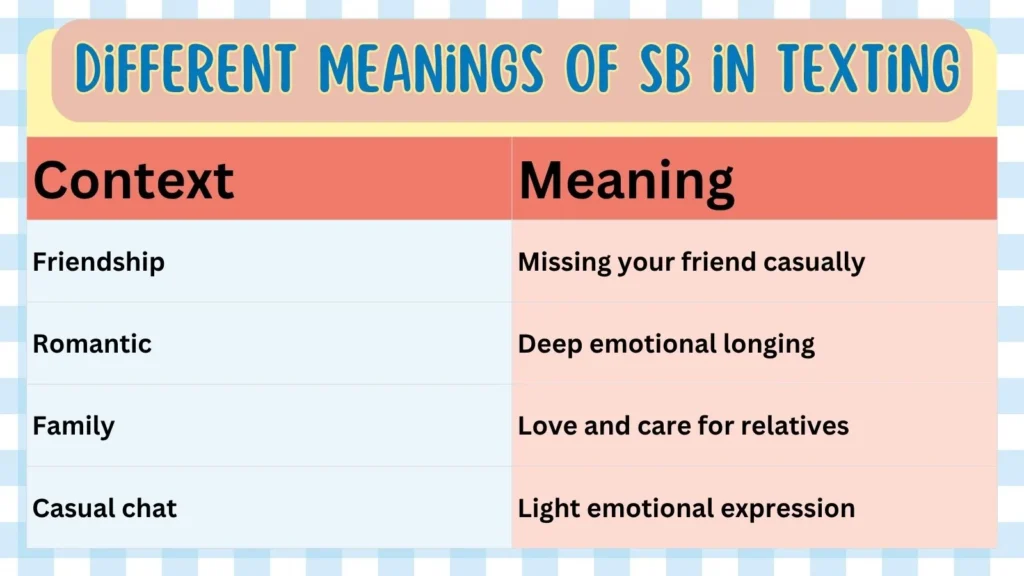
The meaning of IMY can slightly change depending on the relationship and tone of the conversation.
| Context | Meaning |
|---|---|
| Friendship | Missing your friend casually |
| Romantic | Deep emotional longing |
| Family | Love and care for relatives |
| Casual chat | Light emotional expression |
📚 IMY in Modern Digital Culture
Today, IMY meaning in text is part of global digital language. It reflects how communication is evolving in the internet age.
Short forms like IMY make communication faster but still emotionally meaningful. It represents the blend of technology and human emotions.
FAQs:
1. What does IMY stand for in texting?
IMY stands for “I Miss You,” commonly used in informal chats.
2. Is IMY romantic?
It can be romantic, but it is also used in friendships and family conversations.
3. Is IMY formal or informal?
IMY is strictly informal and used in casual communication only.
4. Can IMY be used in professional messages?
No, it is not appropriate for professional or official communication.
5. What is the difference between IMY and ILY?
IMY means “I Miss You,” while ILY means “I Love You.”
🏁 Conclusion:
Understanding IMY meaning in text helps you communicate better in today’s digital world. It is a simple yet emotionally powerful abbreviation that expresses missing someone in a fast and modern way.
Whether used in friendships, romance, or family chats, IMY carries warmth and emotional depth. However, it is important to use it in the right context to maintain meaningful communication.
As digital language continues to evolve, abbreviations like IMY will remain a key part of online conversations, making communication quicker and more expressive.

I am Ahsan and i am a passionate writer and language enthusiast behind PunScope, a platform dedicated to exploring meanings, word origins, and simple explanations. He aims to make learning vocabulary easy, engaging, and accessible for everyone.